
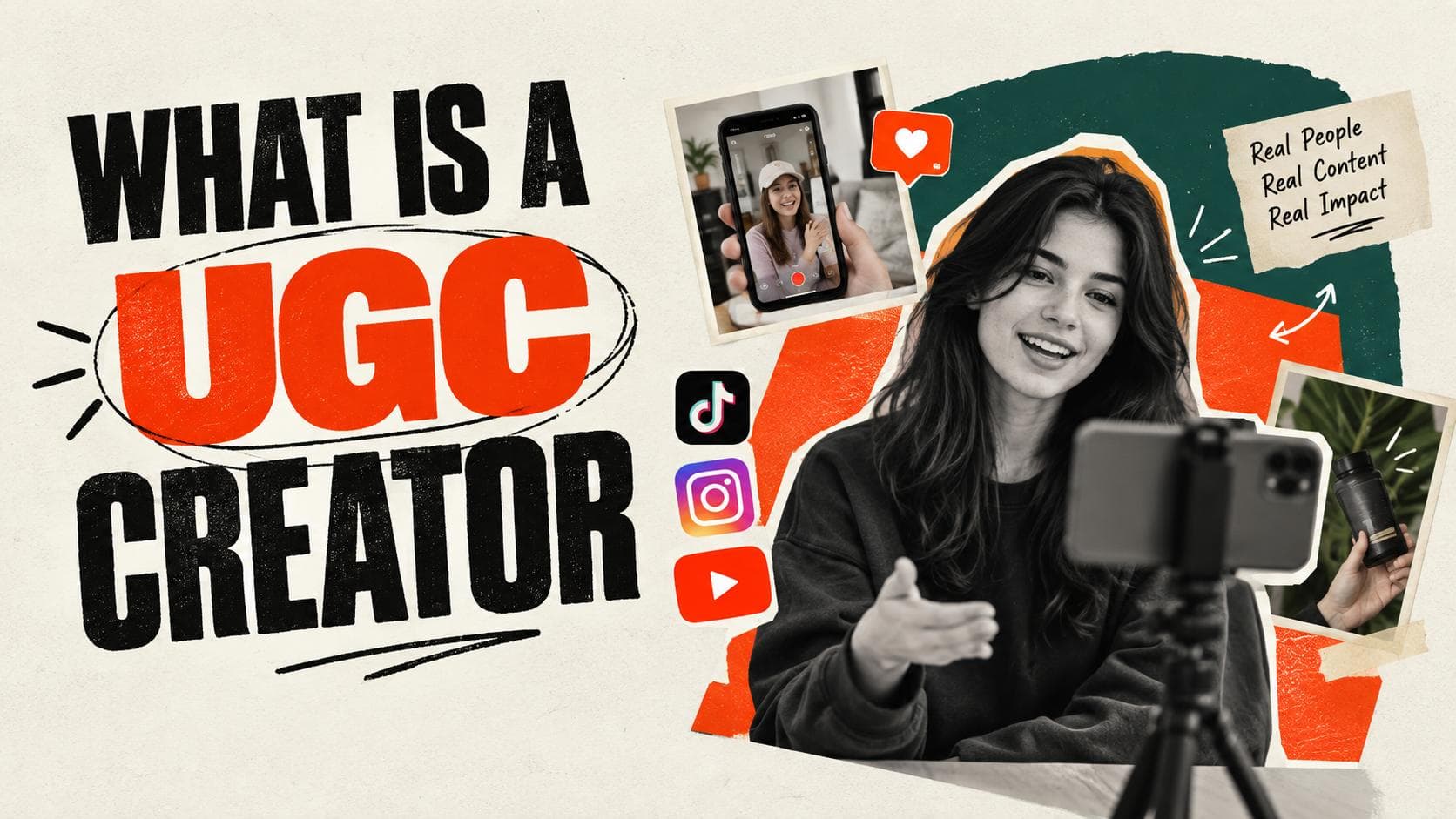
If you've been scrolling through TikTok, Instagram Reels, or YouTube Shorts lately, you've probably seen videos that don't feel like traditional advertisements. Instead, they look like real people sharing their experiences, reviewing products, or showing how something works in everyday life.
This type of content is called UGC (User-Generated Content), and it's become one of the most effective marketing strategies for modern brands.
But what exactly is a UGC creator, and why are businesses investing so heavily in this type of content?
Let's break it down.
What Does UGC Mean?
UGC stands for User-Generated Content. It refers to content created by real people rather than a brand's internal marketing team.
UGC can include:
- Product reviews
- Unboxing videos
- Testimonials
- Before-and-after videos
- Social media posts
- Product demonstrations
- Lifestyle content featuring a product
The reason UGC works so well is simple: people trust people.
Consumers are often more likely to believe a real person's experience than a polished advertisement created by a company.
What Is a UGC Creator?
A UGC creator is someone who creates content for brands that looks authentic and relatable.
Unlike influencers, UGC creators don't need thousands of followers to get paid. Their job is to create engaging content that brands can use in advertisements, social media campaigns, websites, email marketing, and landing pages.
The value comes from the content itself, not the creator's audience size.
For example, a supplement company may hire a UGC creator to film a short video showing how they use the product daily. The company can then use that video in Facebook ads, TikTok ads, Instagram Reels, or on their website.
UGC Creator vs Influencer
Many people assume UGC creators and influencers are the same, but there are important differences.
UGC Creator
- Creates content for brands.
- Doesn't need a large audience.
- Gets paid for content production.
- Brand usually publishes the content.
Influencer
- Has an established audience.
- Promotes products to followers.
- Gets paid for reach and engagement.
- Usually posts content on their own accounts.
A creator with 500 followers can still earn money as a UGC creator if they produce high-quality content.
Why Brands Prefer UGC Content
Traditional advertisements often feel scripted and overly promotional.
UGC feels more natural because it resembles the type of content people already consume every day on social media.
Brands use UGC because it can:
- Build trust faster.
- Increase engagement.
- Improve ad performance.
- Reduce production costs.
- Create more authentic customer experiences.
This is why many successful brands now use UGC in their paid advertising campaigns.
Popular Types of UGC Videos
Not every UGC video follows the same format. Some styles consistently perform better than others.
Product Reviews
Creators share their honest opinions about a product and explain their experience using it.
Problem-Solution Videos
The creator starts with a common problem and then demonstrates how the product helps solve it.
Unboxing Videos
These videos capture a creator's first reaction to receiving and opening a product.
Before-and-After Videos
Popular in fitness, beauty, skincare, and home improvement industries.
Day-in-the-Life Content
Creators naturally incorporate products into their daily routines, making promotions feel more authentic.
How to Become a UGC Creator
Getting started doesn't require expensive equipment or a large audience.
Most successful creators begin with:
- A smartphone with a good camera.
- Basic editing skills.
- Clear communication.
- Strong storytelling abilities.
Start by creating sample videos with products you already own. Practice creating short, engaging content and focus on speaking naturally rather than sounding like a commercial.
Brands are often looking for creators who can explain products clearly and capture attention in the first few seconds of a video.
The Biggest Challenge for UGC Creators
Many people think recording videos is the hardest part of content creation.
In reality, one of the biggest challenges is coming up with fresh ideas.
Creators often spend hours scrolling through TikTok, Instagram, and YouTube trying to answer questions like:
- What hooks are working right now?
- Which video formats are getting views?
- What type of content is performing well in my niche?
- How can I make my content stand out?
Without a process, content research can take longer than creating the video itself.
What Is an AI UGC Creator?
As artificial intelligence becomes more common in marketing, a new category has emerged: AI UGC creators.
An AI UGC creator uses AI-powered tools to speed up parts of the content creation process.
Depending on the platform, AI can help with:
- Finding trending content ideas.
- Discovering viral hooks.
- Generating video concepts.
- Writing scripts.
- Creating voiceovers.
- Editing videos.
- Producing AI avatars.
AI isn't replacing creators. Instead, it's helping them work more efficiently.
Think of AI as a research assistant that helps creators spend less time searching for ideas and more time creating content.
How AI Is Changing UGC Creation
One of the most time-consuming parts of content creation is research.
Before filming, many creators spend hours studying successful TikTok videos, Instagram Reels, and YouTube Shorts to understand what is currently working.
AI tools can help simplify this process by analyzing large amounts of content and identifying common patterns.
For example, creators can use tools like Youleey to discover viral hooks, analyze successful content structures, and generate new content ideas faster. Instead of manually reviewing hundreds of videos, creators can quickly identify concepts worth testing.
This allows brands, marketers, and creators to create more content in less time while still maintaining authenticity.