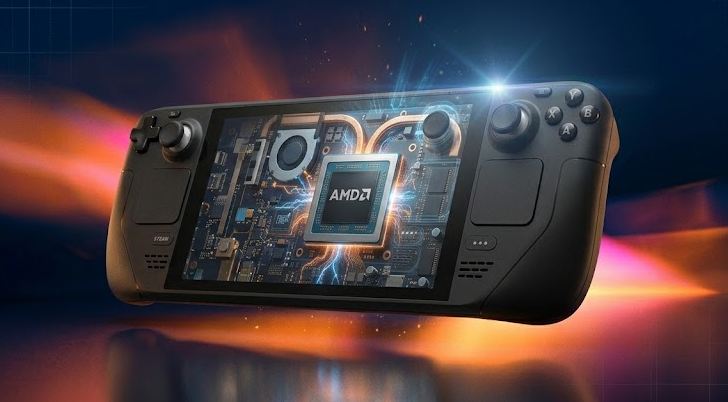
The Steam Deck 2 could be getting closer to reality, as a new leak has revealed details about an unreleased AMD processor that may power Valve's next handheld gaming PC. The chip reportedly features a newer CPU architecture and faster memory than the hardware found in the current Steam Deck.
However, there is still no official confirmation that this processor is being developed specifically for the Steam Deck 2. For now, the leaked information offers an early look at what Valve might be testing for its next-generation gaming device.
Leaked AMD Chip Reportedly Has Six CPU Cores
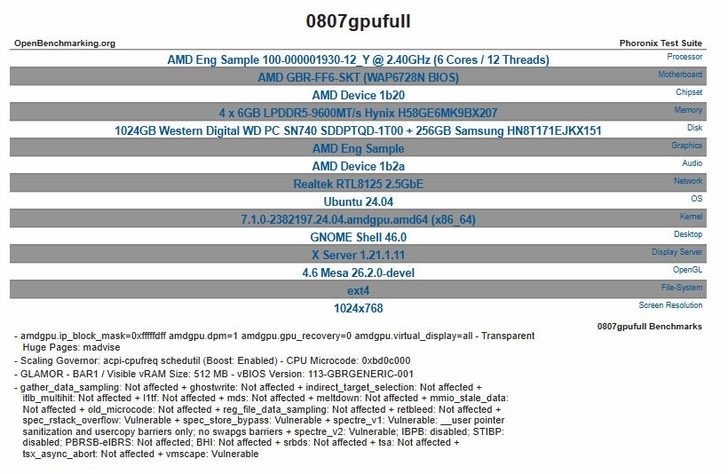
According to recent reports, an unreleased AMD processor appeared in benchmark data with six CPU cores and 12 threads. The chip reportedly runs at a base clock speed of 2.4GHz and may use AMD's upcoming Zen 6 architecture.
If these details are accurate, this would be a notable change from the existing Steam Deck, which uses a four-core, eight-thread processor based on the older Zen 2 architecture.
The leaked test system also reportedly included 24GB of LPDDR5 memory running at 9,600 MT/s. By comparison, the Steam Deck OLED comes with 16GB of LPDDR5 memory rated at 6,400 MT/s.
More memory bandwidth and additional system memory could help a future handheld handle demanding games more comfortably. Modern PC games increasingly require additional resources, particularly when running larger environments and more complex visual effects.
However, the final specifications could be different from those seen in the leaked test system.
Benchmark Results Do Not Tell the Full Story
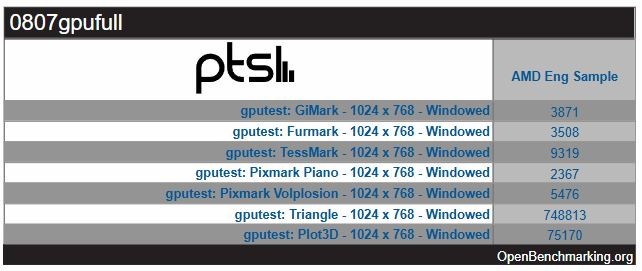
The early performance results have attracted attention, although they do not yet prove that the new chip will deliver a substantial gaming upgrade.
One reported FurMark test produced a score of 3,508 points for the unreleased AMD processor, compared with 3,323 points for the current Steam Deck. However, the two systems were tested at different resolutions, making a direct comparison unreliable.
The leaked processor could also be an early engineering sample running unfinished drivers and software. Its final performance will depend on several factors, including graphics hardware, power limits, cooling and driver optimisation.
In other words, these numbers should not be treated as a reliable prediction of Steam Deck 2 performance.
Why the Gainsborough Codename Matters
Another interesting detail is the processor's possible connection to the codename Gainsborough.
Previous Steam Deck processors were known as Aerith and Sephiroth, names associated with characters from Final Fantasy VII. Gainsborough is also a surname from the same game, which has led to speculation that the new chip could belong to the Steam Deck family.
The naming pattern is an interesting clue, but it is not proof. AMD could be developing the processor for another handheld or a different product entirely.
Reports have also linked the chip to newer manufacturing technology and future graphics architectures, but those details remain unconfirmed.
When Could Steam Deck 2 Launch?
Valve has not announced a release date, price or final specifications for the Steam Deck 2. The company has previously indicated that it wants a meaningful improvement in both performance and power efficiency rather than a small, incremental upgrade.
That makes sense for a handheld device, where better graphics are only part of the equation. A more powerful processor that drains the battery too quickly would not necessarily provide a better gaming experience.
For now, the leaked AMD chip is an encouraging development, not a guarantee of an imminent launch. Gamers should wait for more reliable performance data and an official announcement before making decisions based on these rumours.
If the reported specifications eventually make it into the final product, the Steam Deck 2 could deliver a worthwhile upgrade. But whether it can combine stronger performance, good battery life and an affordable price remains to be seen.